Consolidation in Property Management: What Is Changing in 2026
The German property management sector is undergoing major change. Small and medium-sized management companies are being acquired, businesses are merging into larger groups and new investors are showing interest in a market that was once considered relatively unspectacular. At the same time, many experienced company owners are approaching retirement and looking for succession solutions. As a result, the consolidation of property management is becoming increasingly important.
At Koch & Kollegen and RKS, we are following this development very closely. One important question is what larger management structures mean for owners, tenants and employees. Digitalisation can improve many processes. However, professional property management cannot be fully automated. From our point of view, personal contact remains a crucial part of good management.
Why the Property Management Sector Is Becoming Attractive to Investors
For many years, property management companies were mainly traditional small and medium-sized service businesses. Many were run by their founders for decades. Owners often knew their property manager personally, while employees sometimes looked after the same buildings for many years. This picture is now changing. Industry media have increasingly reported on growing management groups that acquire regional companies and integrate them into larger structures. Private equity and venture capital investors have also discovered the sector.
There are understandable reasons for this. Properties need to be managed regardless of the economic climate, which creates recurring revenue. In addition, many smaller companies face an unresolved succession issue. At the same time, digitalisation can help organise certain processes more efficiently. From an investor’s perspective, this creates an attractive model: several smaller management companies are acquired, merged and then organised through shared software, centralised accounting and standardised processes.
Generational Change Is Accelerating the Trend
One of the main drivers of consolidation is generational change. Many property management companies were built up personally by their owners over several decades. When these entrepreneurs reach retirement age, the future of the business becomes an important issue. There is not always a suitable successor within the family or within the company itself. In such cases, selling the business can be a sensible solution.
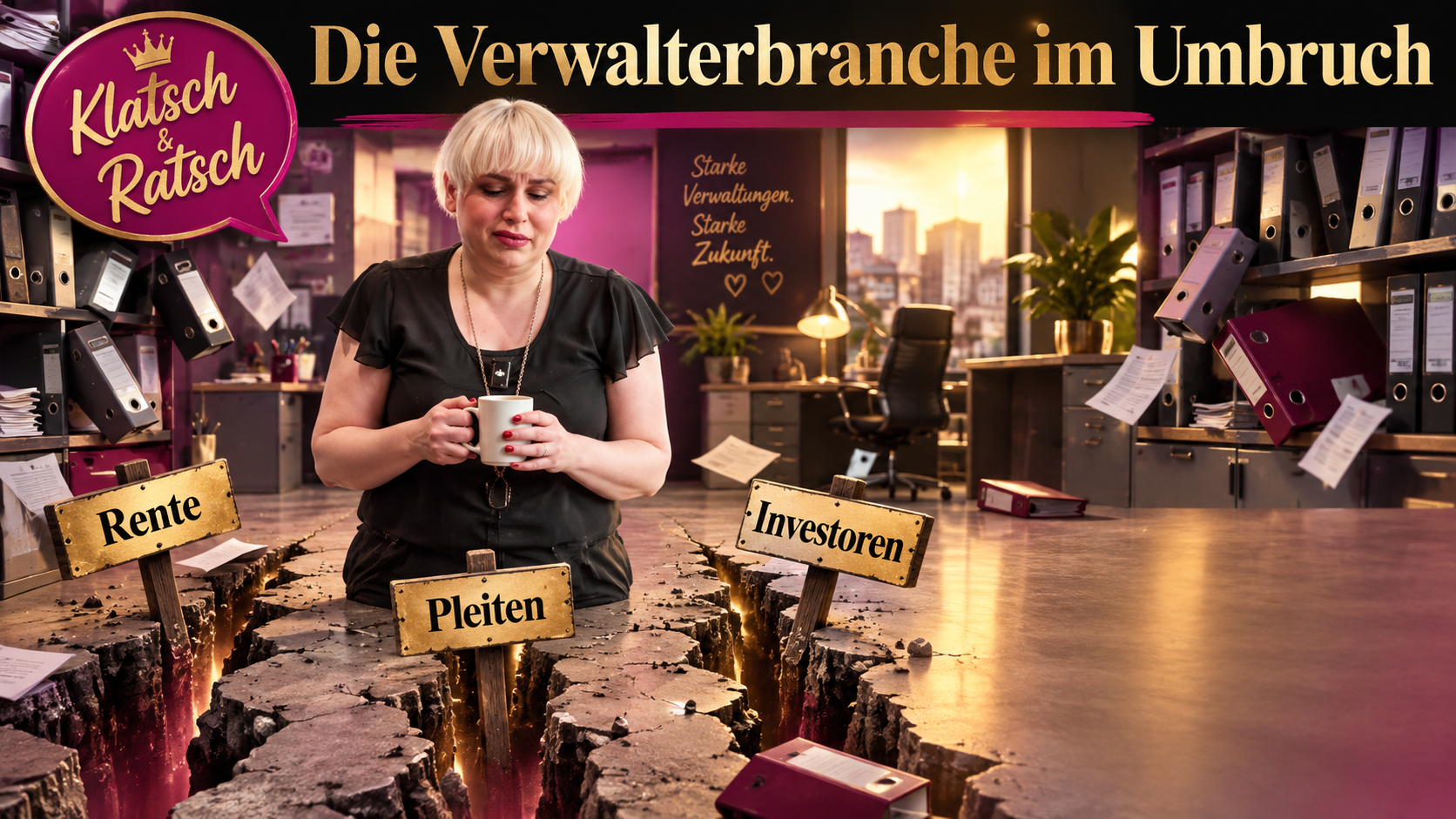
The acquisition of RKS by Jaqueline Hartmann at the beginning of 2025 also took place as part of such a succession arrangement. The company had already existed for several decades and had long-standing management mandates. Such business transfers are not new in themselves. What is changing, however, is the speed at which larger groups are now forming. Instead of taking over one company and continuing it in the long term, some buyers follow a targeted growth strategy and acquire several businesses one after another.
The Managed Portfolio Is an Important Part of Company Value
The value of a property management company does not lie only in office furniture, computers or equipment. The existing management mandates are particularly important. An established company may manage hundreds or even thousands of residential units. These contracts generate recurring fees, while long-term relationships often exist with owners’ associations and private property owners. This portfolio is therefore one of the key reasons why management companies are attractive to buyers.
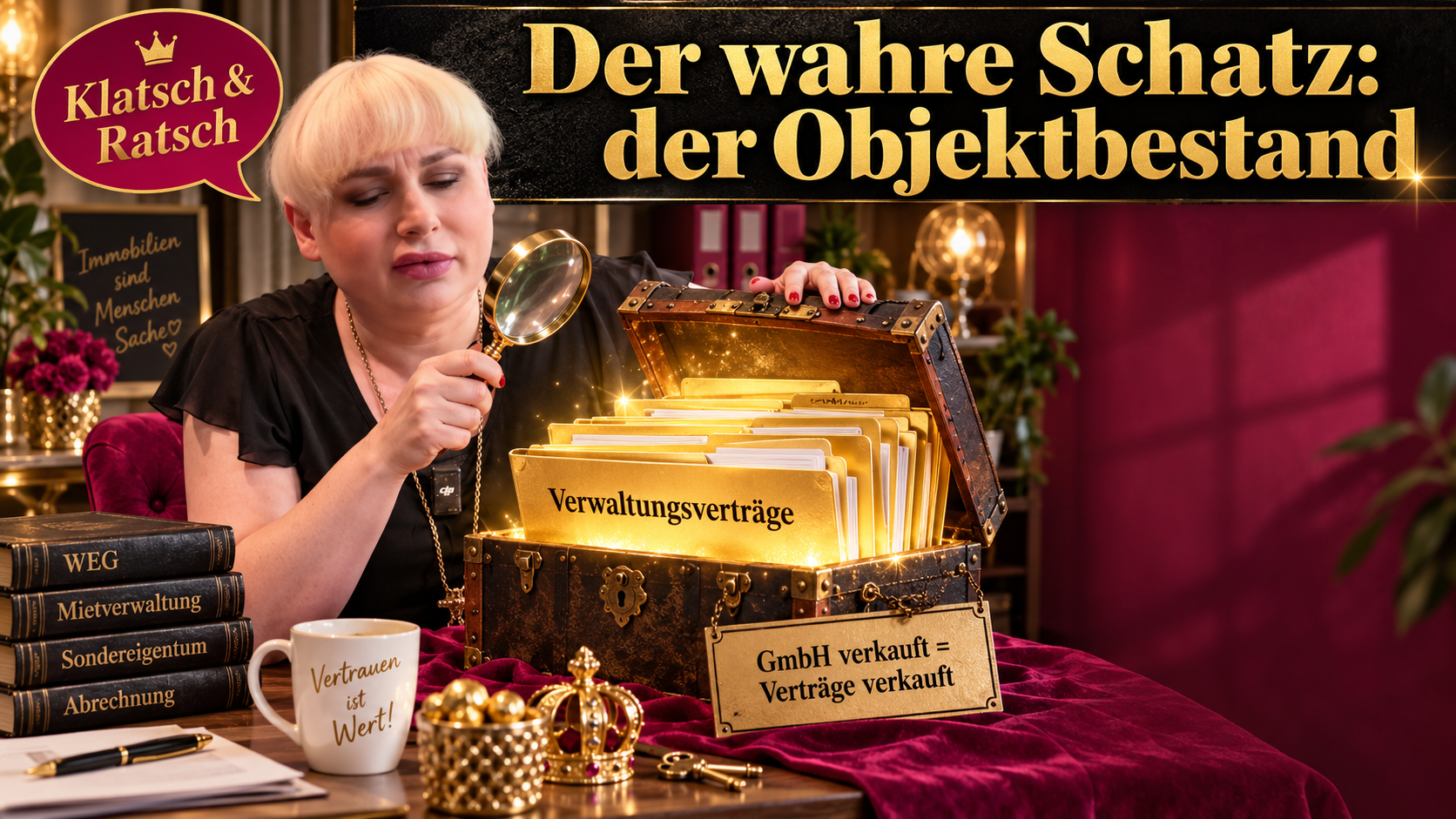
However, a management mandate cannot be compared with a machine or warehouse inventory. Every contract involves people. Owners expect a certain level of service, while employees hold detailed knowledge about individual properties. For this reason, the success of an acquisition is not determined by the purchase agreement alone. In many cases, the real challenge begins afterwards.
Property Management Companies Cannot Simply Be Copied and Merged
On paper, the concept may sound convincing. Several small businesses are acquired, after which accounting, software and management systems are combined. This is supposed to reduce costs and speed up processes. In practice, however, integration is much more complex.
Every management company has its own way of working. Employees know certain processes, owners are used to specific contacts and individual properties often have their own long history. If all of these structures are changed within a short period of time, problems can arise. Size alone therefore does not automatically result in better property management.
What Happens to Employees After an Acquisition?
Employees are one of the most important factors. Good accountants, property managers and experienced administrative staff cannot simply be replaced at will. Many employees have worked for the same company for years or even decades. They know their properties, the owners and often the local contractors as well. This kind of knowledge is not written down in a manual.
When a small management company is acquired, the working environment may change significantly. New software may be introduced, responsibilities can shift and a small team may suddenly become part of a large corporate group. This can work well. However, it can also lead experienced employees to leave the company.
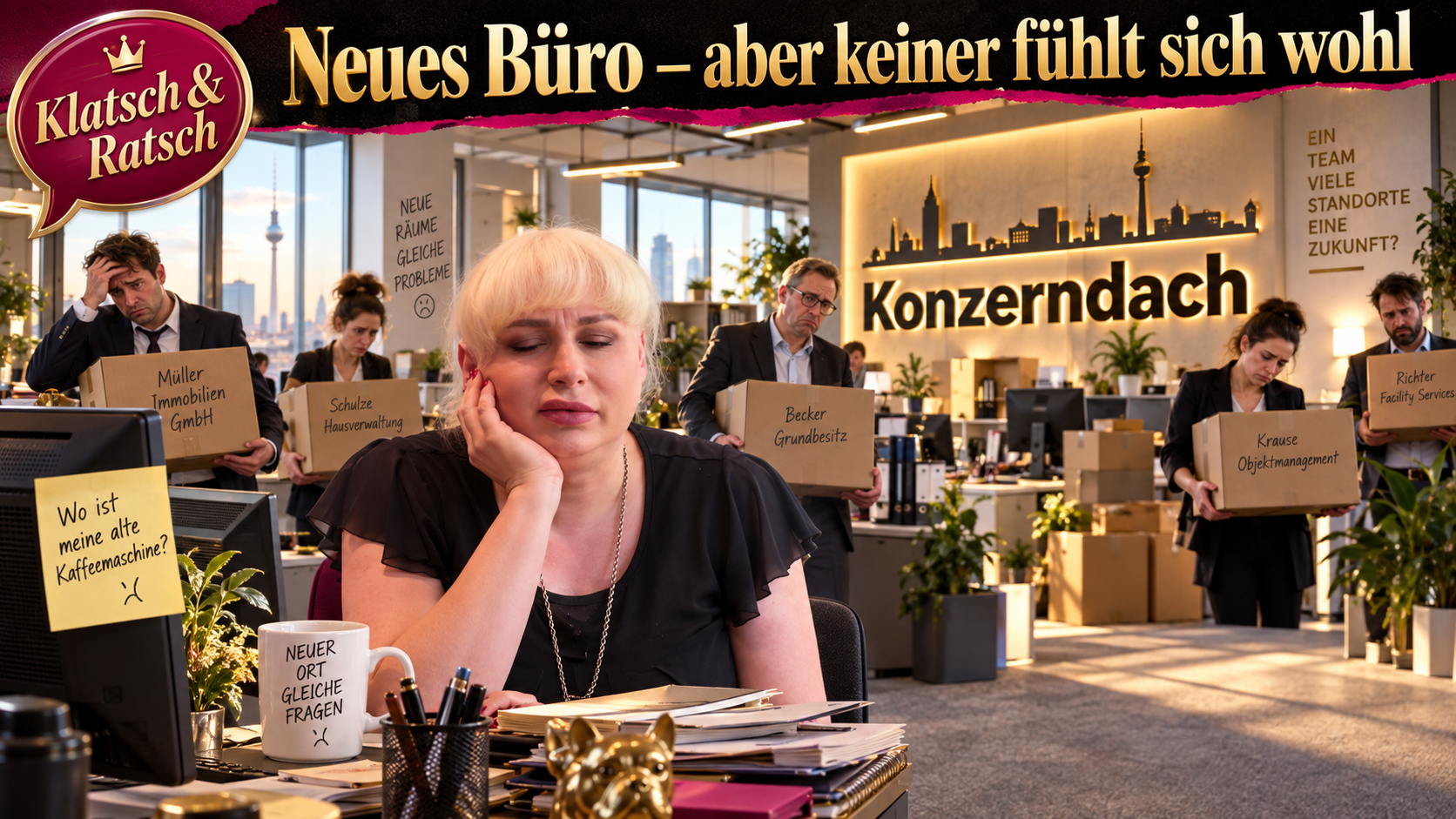
Given the shortage of qualified professionals, this can create serious problems. A buyer may acquire contracts and structures, but employee knowledge and experience can only be retained if the people involved support the change.
Owners Also Need to Accept a Takeover
The customer perspective is equally important. Many owners deliberately choose a particular property management company because they value having a personal contact. After a takeover, this relationship may change. The familiar local manager can suddenly become part of a larger organisation with central service departments, ticket systems and fixed telephone hours.
Some owners see advantages in this. Larger companies may be able to offer more extensive digital systems and greater staffing resources. Other clients, however, may miss the personal connection.
We have already taken over management mandates after owners’ associations became dissatisfied with changes at their previous management company. From our experience, this shows that a successful acquisition has to work on more than just an organisational level. It also has to maintain the trust of the owners.
Digitalisation Is Necessary, but It Does Not Replace Property Management
The trend towards larger organisations is closely linked to digitalisation. Modern software can handle many tasks faster than before. Accounting, payment processing, document management and owner portals can all be organised more efficiently today.
Koch & Kollegen is therefore also investing heavily in digital processes. We are changing our property management software, modernising internal workflows and increasingly using automated solutions. However, digitalisation should not be confused with full automation.
Software can recognise invoices, assign account transactions and provide documents. It can also sort standard enquiries and forward information to the appropriate employee. Yet property management involves much more than that.
Why Property Support Still Requires People
The limits of automation become particularly clear in technical property management. Take a burst water pipe as an example. A digital platform can record the damage report, create a case and pass the information to an employee. However, the real work begins after that.
Someone still needs to assess how urgent the situation is. A contractor has to be found, appointments must be coordinated and several parties may need to be informed. If a service provider fails to show up, someone has to follow up. In addition, further measures may need to be checked and approved.
The same applies to refurbishment projects and larger construction measures. Software can support the process by organising appointments, documents and communication. However, a person still has to make decisions, solve problems and coordinate different interests. These tasks are difficult to standardise completely.
AI Mainly Changes Routine Tasks
Artificial intelligence expands the possibilities of digitalisation even further. In property management, AI can classify documents, process invoices or prepare standard responses. This also shows why some expectations surrounding AI go too far.
Technology can reduce workload, but it cannot automatically replace all of the knowledge required in professional property management. From our point of view, a good strategy is therefore to automate routine work wherever possible while still creating enough time for personal service.
AI on the Phone: Efficient, but Not Always Personal
AI-based telephone assistants are an interesting example. These systems can already answer calls, record requests and pass information to a property management company. For very large organisations, this can be attractive. Thousands of tenants and owners naturally generate a high volume of calls.
At Koch & Kollegen, we have also looked at and tested different solutions. From a technical point of view, some systems are already surprisingly capable. Even so, we have consciously decided not to replace our personal telephone availability entirely with AI.
The reason lies in our understanding of property management. When an owner or tenant calls us, they should generally still be able to speak to a real person. In urgent situations, that can make a significant difference.
Personal Service Can Become a Competitive Advantage
The more the sector becomes digitalised and consolidated, the more important personal service may become again. Large companies can standardise processes and benefit from economies of scale. Smaller and medium-sized management businesses, however, have another advantage: they can often stay closer to their clients.
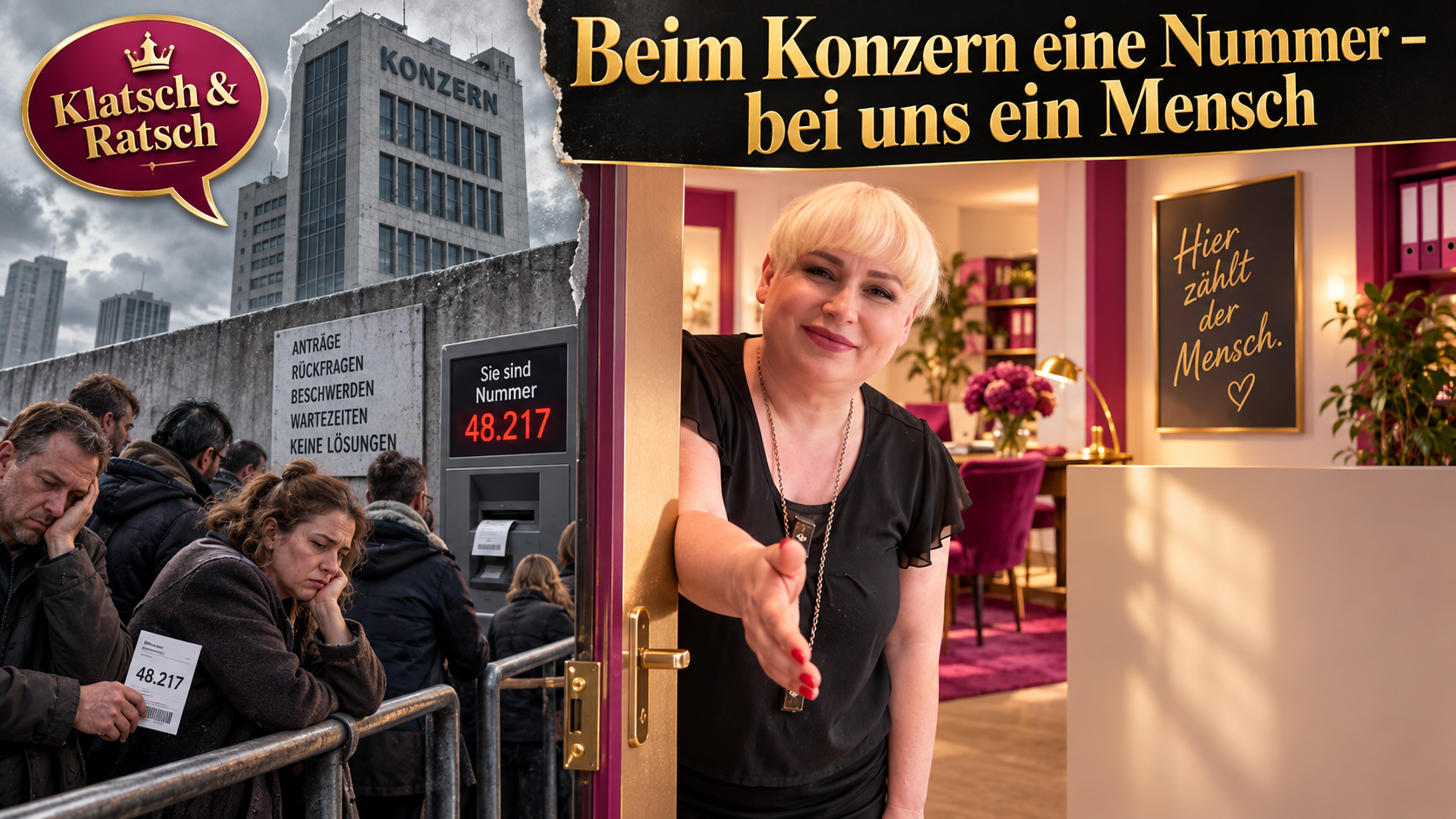
This is exactly the position we want to continue developing at Koch & Kollegen. With around 1,300 managed units and a team of several employees, we are no longer a very small management company. At the same time, we are still at a size where personal contacts and direct communication remain possible.
We therefore deliberately follow a middle path. We want to become more digital and more efficient, but Koch & Kollegen should not turn into an anonymous management machine.
Bigger Does Not Automatically Mean Better
The consolidation of property management is likely to continue. Generational change, increasing requirements, labour shortages and the growing need for investment in modern IT systems all support this trend. However, this does not mean that large management companies are automatically worse. Likewise, a small company is not automatically better.
The quality of the organisation is what matters. A large management company can have excellent processes, skilled employees and reliable contacts. A small company, on the other hand, can be completely overloaded.
Owners should therefore not judge a management company only by its size. Accessibility, professional expertise, stable staff structures and transparent processes are far more important.
What Owners Should Consider When Changing Property Managers
When an owners’ association is looking for a new management company, it is worth taking a closer look behind the scenes. The management fee is important, but it should not be the only decision-making factor.
How is the company organised? Who will be responsible for the property? Is there a dedicated contact person? How are damage reports handled? Which digital services are available? And how quickly does the management company react in urgent situations?
The employee structure can also be relevant. High staff turnover, for example, can lead to important property knowledge being lost again and again. Digitalisation is equally important. Modern systems can improve processes significantly, but technology should make communication easier rather than create additional barriers.
The Future Will Probably Combine Digitalisation and Personal Service
The property management company of the future will be more digital than it is today. Many routine tasks will be automated, documents will be available online and artificial intelligence will support employees in a growing number of areas. At the same time, property management will remain a people-focused business.
Owners want to feel understood. Tenants need practical help when problems arise. Contractors have to be coordinated, while difficult decisions need to be explained. For this reason, we do not see digitalisation and personal service as opposites.
On the contrary, good technology should reduce administrative work so that employees have more time for the tasks where people are genuinely needed.
Consolidation in Property Management: Both an Opportunity and a Challenge
The current consolidation trend can certainly bring advantages to the sector. Larger companies may be able to invest more heavily in software, professionalise processes and organise certain tasks centrally. Acquisitions can also provide succession solutions for older business owners.
However, growth alone does not solve the challenges of property management. A successful management company needs reliable technology, financially sustainable structures and qualified employees. Above all, it needs the trust of its clients.
For Koch & Kollegen, this means that we want to grow while preserving our personal way of working. Modern software, automation and AI should help us become more efficient. They should not replace people.
After all, we do not only manage accounts, documents and data. We manage properties – and behind those properties are people.