Property management has traditionally been considered a comparatively crisis-resistant business. Residential buildings still need to be managed, owners’ associations require professional support, service charges must be calculated, repairs have to be coordinated and new legal requirements must be implemented. In other words, there is certainly no shortage of work. And yet, more and more property management companies are reducing their portfolios, terminating management contracts or, in some cases, closing their businesses altogether.
At first glance, this seems contradictory. If demand for professional property management remains high, why are some companies struggling economically? The answer lies in a fundamental imbalance that has developed over many years: while the workload, staffing costs, technical requirements and administrative obligations have continued to increase, management fees have often failed to keep pace with these developments.
This issue is particularly relevant for us at Koch & Kollegen and RKS because we experience these challenges directly in our daily work. In a recent episode of our YouTube channel Immobilientagebuch, we therefore discussed why professional property management is becoming increasingly difficult to operate profitably and why outdated fee structures can eventually threaten the economic viability of a management company.
How Does a Property Management Company Earn Its Money?
To understand the problem, it helps to first look at how property management companies are usually paid. Property owners or condominium owners’ associations generally enter into a management agreement with the management company. This contract defines the services to be provided as well as the remuneration the management company receives for its work.
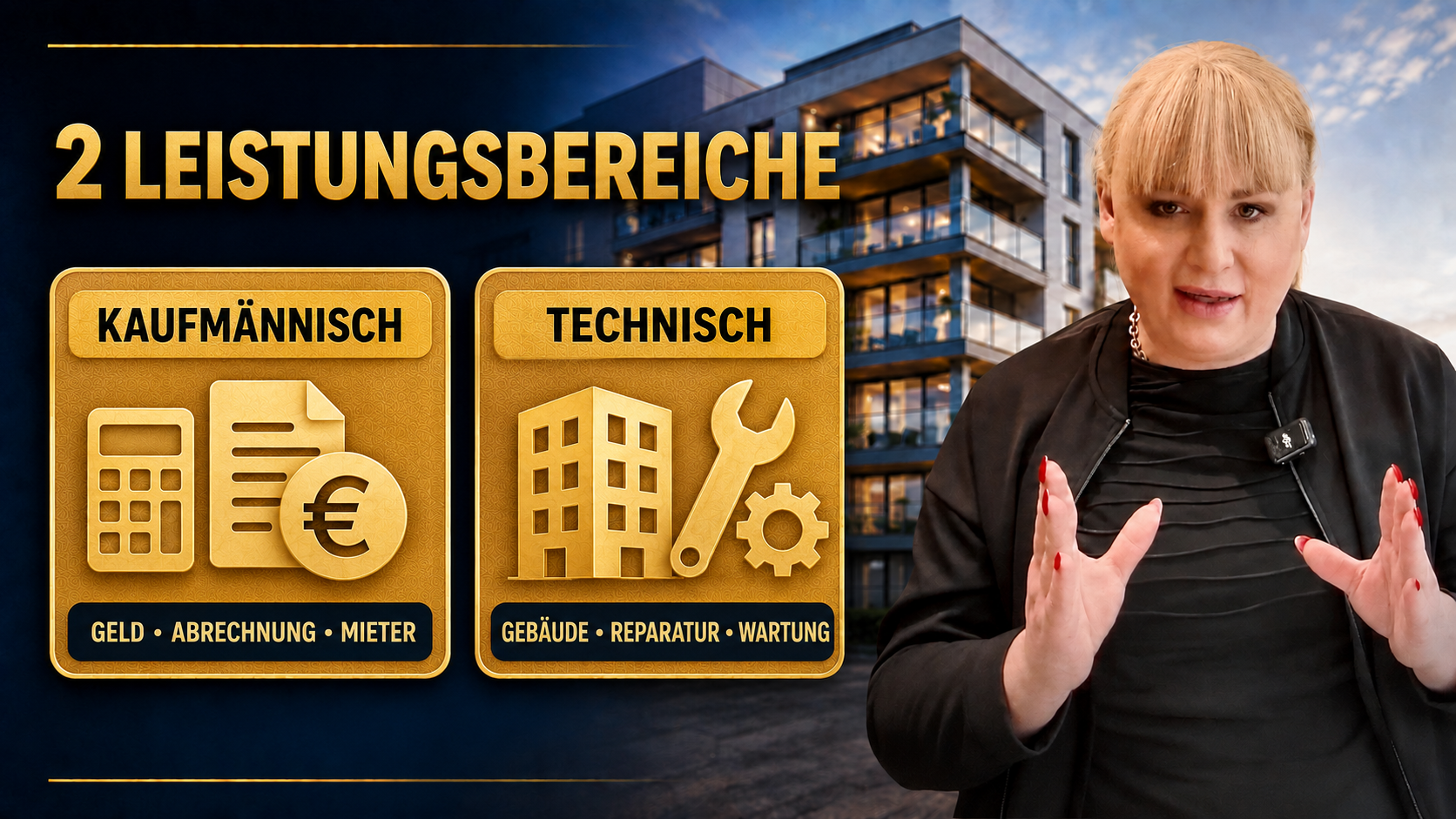
In most cases, the basis is a regular management fee, often calculated per residential unit. This basic fee is intended to cover the routine services required to manage a property professionally. These services can include monitoring rental payments, bookkeeping, preparing operating cost statements, handling payment transactions, communicating with owners and tenants, managing documents and contracts, coordinating contractors and service providers, and carrying out regular property inspections.
Depending on the type of property and the agreed scope of services, additional fees may also be charged for work that goes beyond standard management duties. Larger renovation projects, complex construction supervision or extraordinary owners’ meetings, for example, can involve a significantly higher workload and may therefore require separate remuneration.
The basic principle sounds simple: the property management company receives a regular fee and provides a clearly defined range of services in return. Problems begin, however, when these fees remain largely unchanged for many years while the actual cost of providing those services continues to increase.
Management Fees From Another Era
The consequences of outdated fee structures became particularly clear to us after taking over RKS at the beginning of 2025. The company has been operating for more than three decades and manages a number of properties and owners’ associations that have been part of its portfolio since the 1990s.
Long-standing customer relationships are, of course, a positive sign. They demonstrate continuity, trust and many years of cooperation. At the same time, however, we discovered that some management fees had hardly been adjusted over very long periods of time. In certain cases, the financial structure of the contracts still reflected economic conditions that no longer correspond to the realities of running a modern property management business.
A fee that may have been sufficient 15 or 20 years ago does not automatically remain economically viable today. Staff costs have risen, software and technology have become more expensive, legal and administrative requirements have increased and owners expect a considerably higher level of accessibility, transparency and documentation than in the past.
If management fees remain frozen while these costs continue to rise, the economic gap becomes wider every year.
Rising Minimum Wages Increase Personnel Costs
Personnel is one of the most important cost factors in professional property management. Since 1 January 2026, the statutory minimum wage in Germany has been €13.90 per hour, and it is scheduled to rise to €14.60 on 1 January 2027.
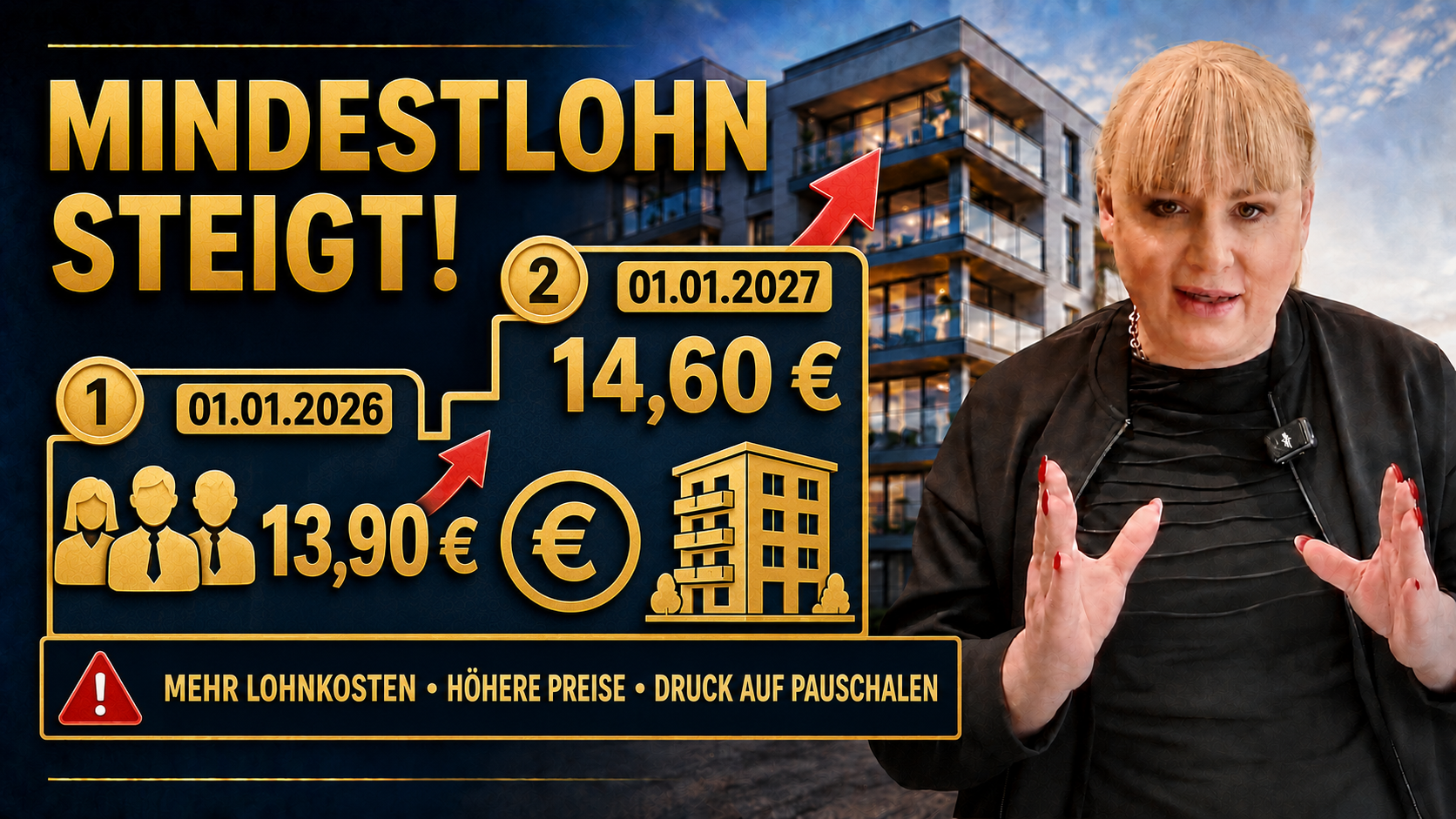
For companies, however, rising wages do not simply mean paying a higher hourly rate. Employers also have to cover social security contributions and other employment-related costs. In addition, companies that want to attract qualified and reliable employees usually need to pay more than the statutory minimum wage.
This is particularly important in property management because it is fundamentally a service business. Accounting, owners’ meetings, communication with tenants, technical coordination, contractor management and legal documentation cannot be carried out without qualified staff. Even where digital systems help automate individual processes, people remain responsible for reviewing information, making decisions, communicating with clients and solving problems.
A professional management company therefore needs experienced employees who can work reliably and independently. These employees expect fair salaries, suitable equipment and reasonable working conditions. All of this has to be financed through the company’s management income.
Property Management Companies Also Face Rising Operating Costs
Sometimes owners assume that management fees should remain unchanged because the property management company is essentially doing “the same work” as before. In reality, however, this assumption is incorrect in two different ways.
First, the work itself has changed considerably. Second, the operating costs of running a management company have increased just like those of almost every other business.
Property management companies have to pay for office space, insurance, telecommunications, accounting systems, data protection, software licences, IT infrastructure, hardware, professional training, tax advice and many other services. These expenses do not remain static simply because a management contract was signed many years ago.
Official statistics also show that prices in the real estate services sector have increased. According to the German Federal Statistical Office, prices for real estate brokerage and property management services rose by an average of 2.8 percent in 2025 compared with the previous year. Companies cited higher general costs and contractual price adjustments among the reasons for these increases.
Property management companies are therefore affected by the same economic developments as their clients. They pay higher prices for technology, external services, energy, salaries and office equipment. They are not operating in a separate economic reality.
The Workload Has Increased Significantly
The increase in operating costs is only part of the problem. Even more important is the fact that property management itself has become significantly more complex.
New legal regulations, documentation requirements, technical obligations and administrative procedures continuously increase the workload of professional property managers. Tasks that may once have required only a few phone calls and a short letter can now involve detailed documentation, extensive communication and legally relevant record-keeping.
Construction and renovation projects are a good example. A major repair or refurbishment is no longer simply a matter of hiring a contractor and checking whether the work has been completed. Offers have to be requested and compared, appointments must be coordinated, owners need to be informed, decisions have to be documented, invoices must be reviewed and the progress of the project needs to be monitored.
Depending on the size of the project, this can effectively turn into a form of project management. That requires time, professional knowledge and careful documentation.
At the same time, owners and tenants increasingly expect fast communication and immediate access to information. Email, online portals and digital services may make communication more convenient, but they also increase expectations regarding response times and availability.
Digitalisation Improves Efficiency – but Requires Investment
One important response to the growing workload is digitalisation. At Koch & Kollegen and RKS, we are therefore investing heavily in modernising our systems and internal processes.
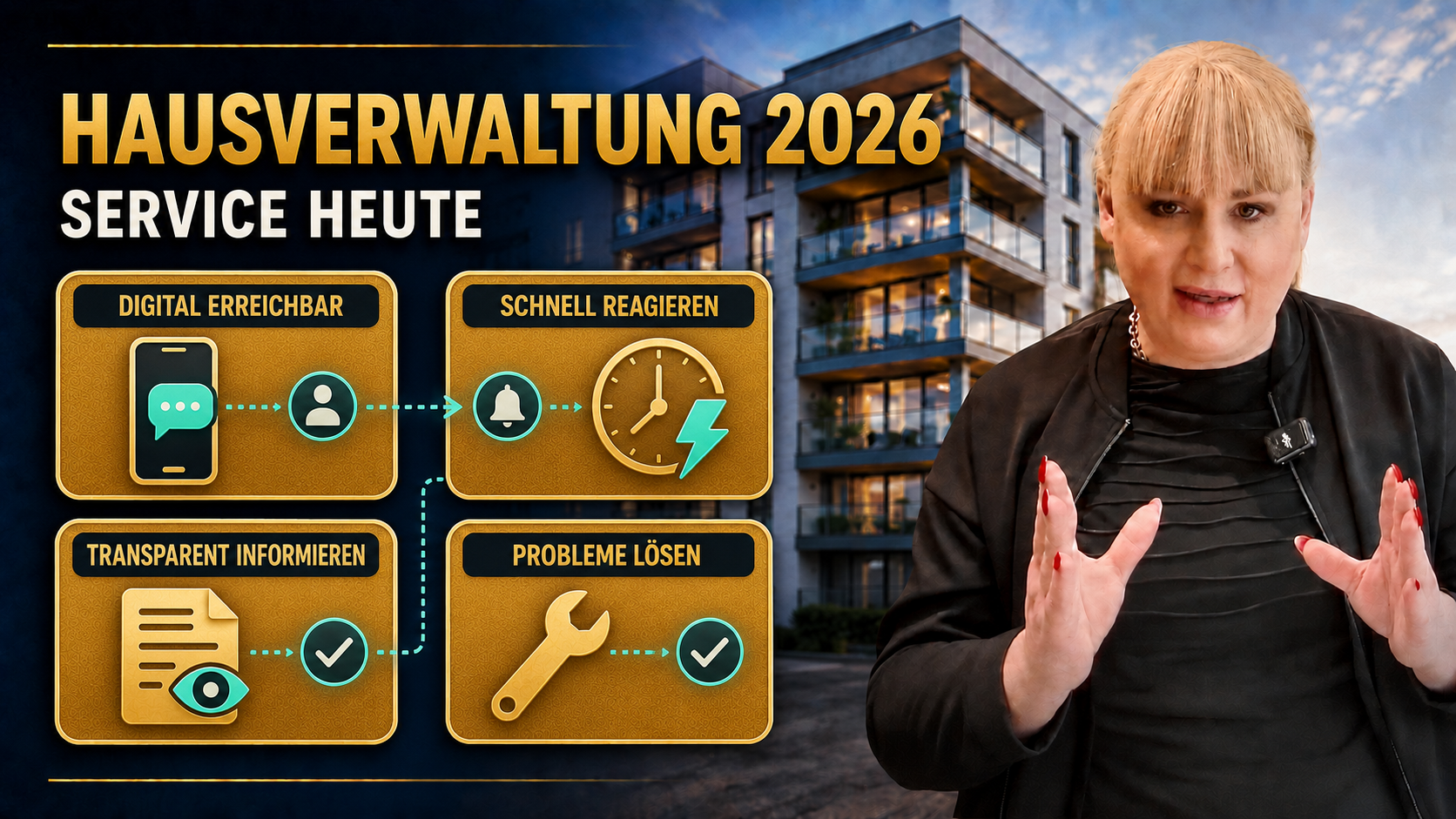
Modern property management software, digital accounting systems, owner portals and tenant portals can make many processes considerably more efficient. Owners can access important documents directly through a portal instead of contacting the management company every time they need a statement, contract or piece of information. Damage reports can be submitted digitally, documents can be distributed more quickly and routine enquiries can be handled more efficiently.
This benefits both sides. Owners gain faster access to information, while the management company can reduce repetitive administrative work and concentrate more time on complex matters that genuinely require personal attention.
However, digitalisation is not free. Software licences, cloud services, IT security, new hardware, data migration, training and the restructuring of internal processes all require investment.
A management company that earns just enough to cover its basic monthly expenses will eventually struggle to finance these necessary improvements. This is precisely why economically sustainable management fees are so important.
Why Owners Often Accept Other Price Increases More Easily
One interesting aspect of the discussion is that increases in management fees are often treated differently from increases in other service costs.
If a contractor raises their hourly rate, owners may complain about the price, but in many cases they ultimately accept it because the repair still needs to be carried out. The same applies to cleaning companies, maintenance providers or other service businesses.
When a property management company increases its fee, however, the reaction can sometimes be considerably more critical. Owners may ask why they should suddenly pay more if the management company appears to be providing the same service as before.
From a business perspective, however, the situation is very similar. If the costs of providing a service increase, the price of that service will eventually have to increase as well.
Of course, owners are entitled to expect transparency. Any adjustment to management fees should be understandable and proportionate. Clients should know which services are being provided and why costs are changing.
The difficulty arises when fees remain unchanged for ten or fifteen years. At that point, the necessary adjustment can become much larger than it would have been if smaller increases had been introduced gradually.
Gradual Adjustments Are Easier Than a Major Increase After Many Years
This is one of the issues we have encountered with some of the long-standing RKS management contracts.
If fees had been adjusted gradually over the years in line with changes in costs, many of the necessary increases would probably have been much easier for owners to understand and accept.
When a management fee remains almost unchanged for a decade or more, however, the eventual adjustment can appear substantial. From the owner’s perspective, the increase may feel sudden. From the management company’s perspective, however, the opposite is true: the company may have been providing services for years at a price that was increasingly disconnected from its actual costs.
Our aim with existing communities is therefore to find reasonable and sustainable solutions. We do not want to force unnecessary increases on long-standing clients. At the same time, professional management cannot be provided indefinitely under conditions that are economically unsustainable.
The goal has to be a fee structure that allows the management company to maintain its quality of service over the long term.
What Happens if Owners Refuse Necessary Fee Adjustments?
At some point, every property management company has to calculate whether managing a particular building or owners’ association still makes economic sense.
How much staff time does the property require? How many phone calls and emails are generated? How many technical problems occur? How many owners need individual support? How much documentation is required? And how much administrative work is involved?
The decisive question is then whether the agreed management fee actually covers these costs.
If the answer is permanently no, the management company has only a limited number of options. It can attempt to improve efficiency, introduce digital processes, restructure its organisation or renegotiate its fees.
If none of these measures produces a sustainable result, terminating the management contract may ultimately become unavoidable.
This is one reason why owners are increasingly hearing that management companies no longer want to take on certain buildings or are choosing not to renew existing contracts.
The reason is not necessarily a lack of work. Quite often, the opposite is true. The demand exists, but the conditions under which the work is supposed to be performed are no longer economically viable.
Sometimes Shrinking the Portfolio Is Healthier Than Growing
Growth is not automatically a positive development for a property management company.
Managing another 100 apartments may generate additional revenue, but it also creates additional accounting, additional owner enquiries, more tenant communication, more contractor coordination, more meetings and more technical issues.
A management company therefore has to grow organisationally and financially together with its portfolio.
If that does not happen, employees eventually become overloaded and service quality begins to suffer.
For this reason, some management companies deliberately reduce the number of properties they manage. In business terms, this is sometimes referred to as “healthy downsizing”.
At first, this may sound contradictory. In reality, however, a smaller but financially sustainable portfolio can be considerably healthier than a large portfolio in which certain properties consistently generate losses and place excessive pressure on employees.
This Does Not Mean Every Property Management Company Is Facing Bankruptcy
Despite the deliberately provocative title of our discussion, it would be inaccurate to claim that the entire German property management sector is facing a general wave of bankruptcies.
The market is far too diverse for such a sweeping conclusion. Large management companies operate under different conditions from small regional businesses, and management fees vary significantly depending on location, property size, type of management and the services included.
The more important development is that property management increasingly has to be calculated as a professional business.
The old model of maintaining the same fee for decades while continuously adding new obligations, digital services and documentation requirements is becoming increasingly difficult to sustain.
Professional management requires realistic pricing.
Our Experience With Koch & Kollegen and RKS
For us, this development is particularly interesting because Koch & Kollegen and RKS bring together different company histories, regions and management portfolios.
The economic environment in Berlin differs from that in the Vogtland region. Property values, incomes and owners’ expectations are not identical, and regional management fees can also vary considerably.
However, the fundamental business principles remain the same everywhere.
Employees need to be paid. Software has to be financed. Technology has to work. Legal requirements must be implemented. Offices and infrastructure have to be maintained. And a management company must ultimately be able to operate profitably.
For this reason, we have deliberately made 2026 a year of optimisation within our property management operations.
We are modernising processes, changing software systems, improving our technical infrastructure and further developing internal workflows. The aim is not digitalisation simply for the sake of appearing modern.
The aim is to build a property management organisation that remains efficient, reliable and sustainable in the long term.
Good Property Management Needs a Sustainable Economic Foundation
Ultimately, property owners benefit from this as well.
An extremely low management fee is of little value if the management company is understaffed, employees are permanently overloaded or necessary investments can no longer be financed.
Reliable property management requires qualified employees, functioning technology, professional organisation and sufficient time to deal with individual properties properly.
All of these things have a price.
For this reason, owners should not evaluate a property management company solely according to which provider offers the lowest monthly fee. An equally important question is what services are included in that fee and whether the management company can realistically continue providing those services at the required level of quality over the long term.
This question is likely to become increasingly important for owners’ associations in the coming years.
The demand for professional property management is not disappearing. The real challenge is ensuring that this service can continue to be delivered reliably, professionally and on a financially sustainable basis.